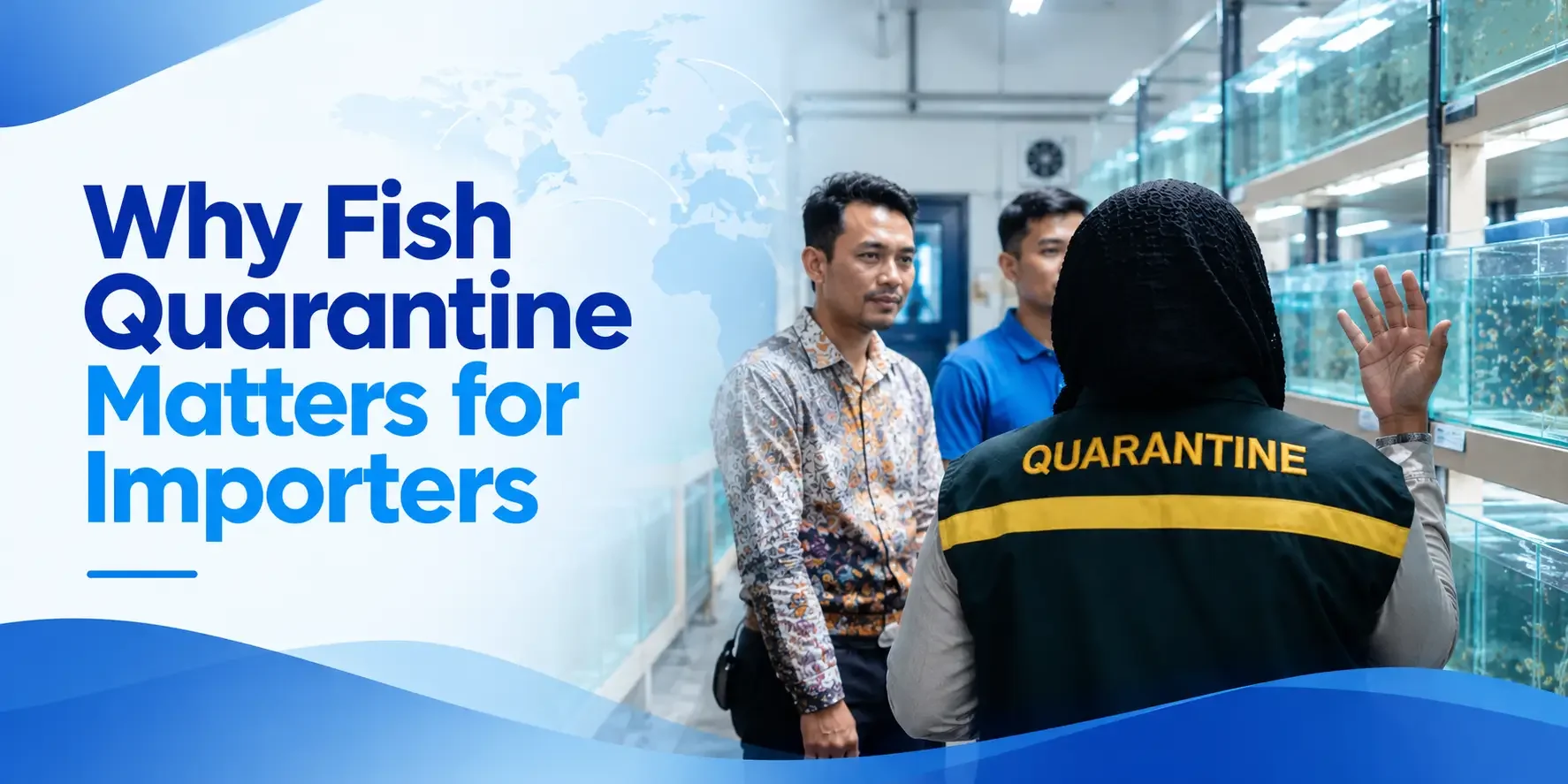
Prepare quarantine before the shipment lands, not after the first fish gets sick. Every shipment of live fish moving from one region to another can carry parasites and viruses, even when the fish look healthy, and for ornamental fish importers, one unquarantined batch can cost far more than the quarantine itself. This guide explains why fish quarantine matters, how to quarantine imported ornamental fish step by step, what to check in your supplier's quarantine, and which mistakes to avoid.
What Is at Stake Without Quarantine
Imported fish have been through handling, packing, and long transit. A fish that looks fine on arrival can still carry a parasite or pathogen that only shows up days later. That makes every new batch an unknown until it clears quarantine.
Here is what you risk by skipping it:
Your existing stock. One unquarantined batch can spread disease across your whole facility.
Your money. A few weeks of quarantine costs far less than treating or replacing stock after an outbreak.
Your reputation. Wholesalers who deliver healthy fish consistently keep customers.
Your records. Arrival counts, DOA (dead on arrival) numbers, and daily observations help you resolve claims with suppliers and trace where a problem started.
Quarantine doesn't slow your business down. It protects the stock you already paid for.
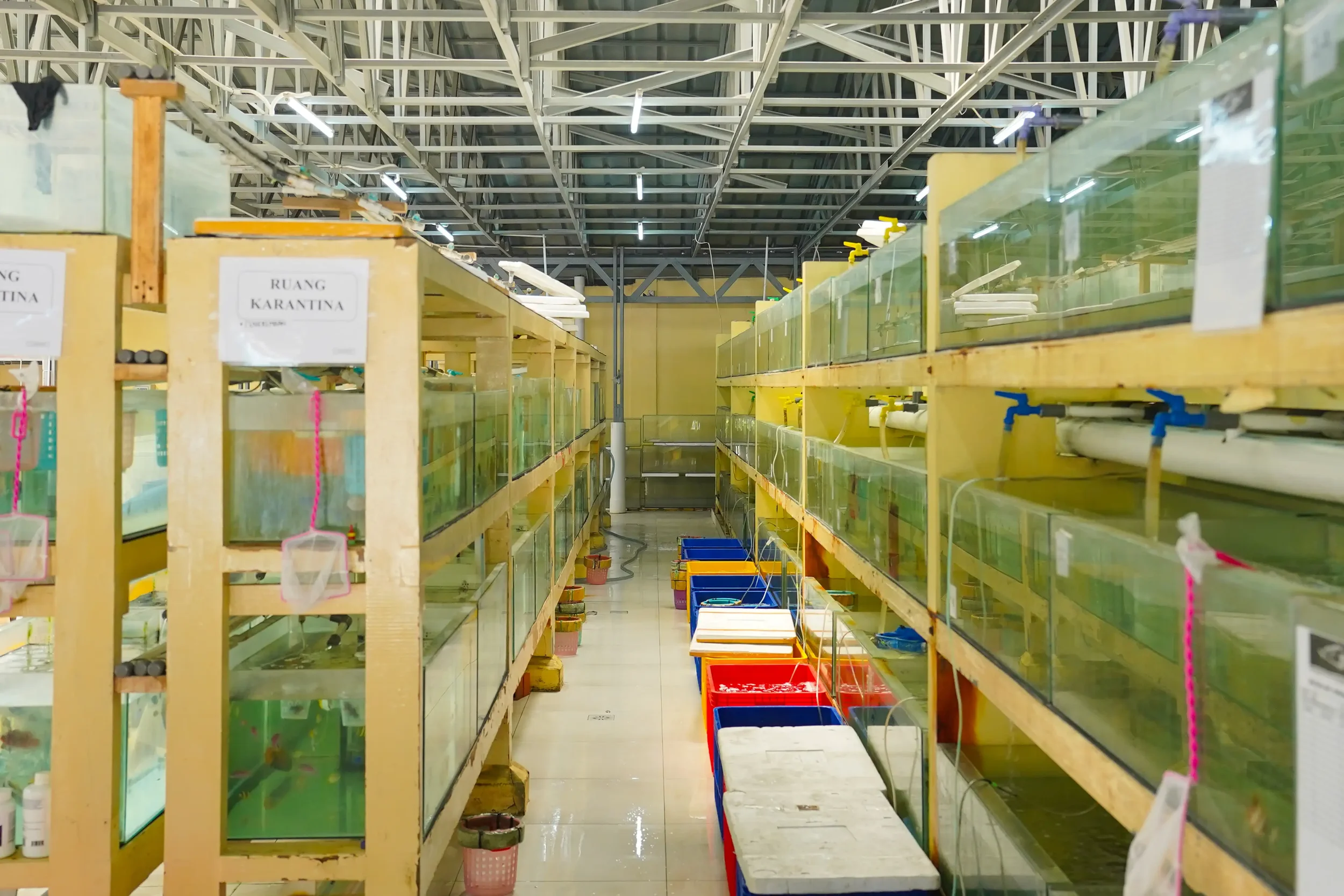
How to Quarantine Imported Ornamental Fish:
Quarantine works in two stages: at your supplier before export, and at your facility after the fish arrive. A health certificate from the exporting country's quarantine authority is an official requirement for the shipment, but it does not replace your own quarantine, which catches problems that appear after transit. The steps below start with choosing a supplier and end with releasing fish to stock.
Step 1: Choose a Supplier With Verified Pre-Export Quarantine
Good quarantine starts before the shipment leaves. Ask for evidence rather than general assurances. Certificates, inspection routines, and documented procedures tell you much more than a promise.
Step 2: Prepare Your Quarantine Area Before the Shipment Arrives
Set up before the fish arrive. A stressed fish waiting in a bag is not the time to improvise.
A dedicated area or system, physically separated from your sales and stock tanks, with fish moving one way only: from quarantine to stock, never the reverse.
Enough tanks to keep batches separate. Each shipment or source gets its own tank or system.
Heating, filtration, and aeration sized for the stocking volume, with filter media seeded from an established system where possible.
Test kits for ammonia, nitrite, pH, and temperature.
Separate equipment (nets, siphons, buckets) for quarantine, with a disinfection routine between systems.
A written protocol, so everyone on your team follows the same steps.
FAO's guidelines for quarantine of live aquatic animals include standards for construction, operation, and equipment disinfection, including for ornamental species.
Step 3: Check Documents and Receive the Shipment
Before opening any box, check that the paperwork matches the shipment. This usually includes the official health certificate and, for certain species, CITES documents. Depending on the destination, there may be additional steps:
European Union: fish enter through a Border Control Post, and the shipment is pre-notified through TRACES.
United Kingdom: the UK has its own border rules and systems.
Other European countries: national rules apply. Confirm them with the local authority or your customs broker.
Step 4: Acclimate Fish and Record Their Arrival Condition
On arrival, check and record:
| Check | What to record |
|---|---|
| Boxes and bags | Damage, leaks, labels, packing condition |
| Bag water | Temperature and signs of water quality problems |
| Fish | Count by species, number DOA, obvious injuries |
| Evidence | Photos or video, within the time frame in your supplier's claim terms |
Be careful with acclimation after long transit. Fish breathing in a closed bag lowers the pH of the water, and ammonia can become a risk, so a very slow drip acclimation that keeps fish in deteriorating bag water for a long time can do more harm than good. Choose a method suited to the transit time and species.
When you move fish into quarantine, avoid pouring transport water into the system, and dispose of it according to local rules.
Step 5: Quarantine by Batch
Keep each batch separate and use an "all in, all out" approach: fish in a quarantine tank enter and leave together, and a new batch is never added to a tank that already holds fish in quarantine.
The general recommendation for ornamental fish is 2–4 weeks, because most common diseases show symptoms within that window. The right length should follow the life cycle of the disease organisms common to the species, so some species, or batches with problems, may need longer. Always follow any mandatory period required by your country.
Each day:
Observe every tank. Look at appetite, swimming behavior, color, and fin condition.
Test the water regularly, especially ammonia and nitrite.
Change water on a regular schedule, using conditioned water at the same temperature.
Keep records. Log mortality, symptoms, and actions by batch and date.
Step 6: Handle Problems Early
If fish show symptoms, isolate the affected tank or batch and stop any movement of fish out of it. Do not guess at treatment. Not every fish needs medication, and the wrong drug or dose can cause harm. Work with an aquatic veterinarian to confirm the problem and the treatment, and follow the legal rules in your country.
Step 7: Release Fish to Stock or Sale
Release a batch only when the full observation period is complete, the fish are eating well and behaving normally, and your records show no unresolved problems. Move fish without transferring quarantine water, then clean and disinfect equipment and let it dry before the next batch.
How Aqua Marindo Quarantines Fish Before Export
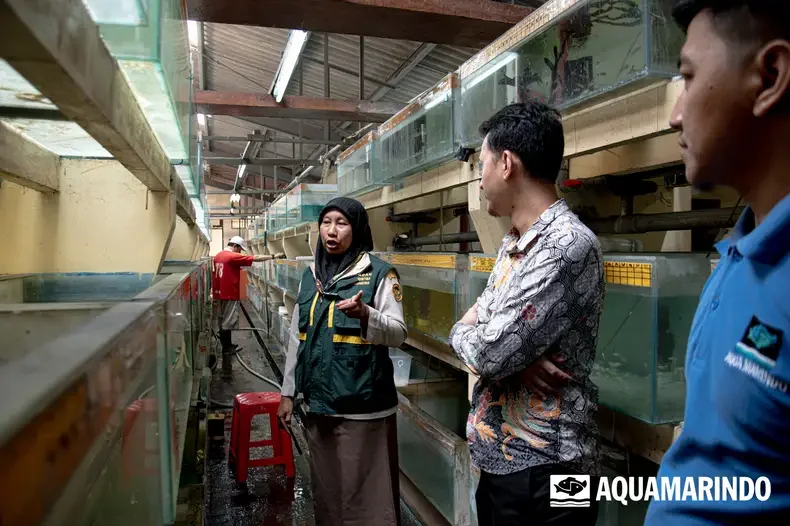
The principles are the same, but the scale is larger and there is an extra requirement: the fish we ship must be healthy when they leave and must meet the requirements of the destination country.
Our Quarantine Process Before Shipping
In general, our pre-export quarantine process works like this:
Batch separation. Fish are grouped by species and batch and are not mixed, so a problem in one batch does not spread to another.
Daily observation. We check appetite, swimming behavior, color, and fin condition, and we monitor water quality.
Handling problem fish. Fish that show symptoms are separated from their batch and are not moved on to shipping.
Preparation before packing. Only healthy, active fish are selected for shipment.
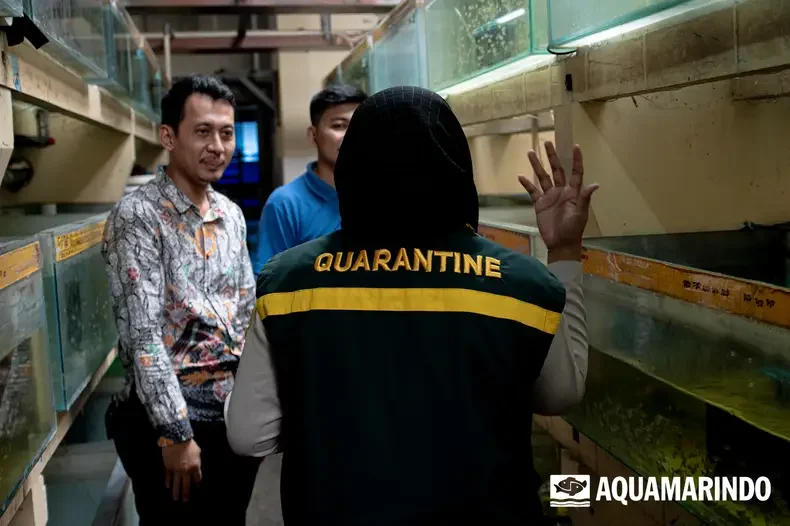
Quarantine inspection and documents. Before departure, the shipment is inspected by quarantine officers, and a fish health certificate is issued as part of the export documents.
Packing and shipping on the schedule and route for the destination country.
Our Quarantine Installation Is Certified and Monitored by Barantin
In Indonesia, fish health inspection for export is carried out by the Indonesian Quarantine Agency (Barantin). Aqua Marindo holds two certificates related to fish quarantine:
CKIB certificate (Cara Karantina Ikan yang Baik, or Good Fish Quarantine Practices): confirms that we apply fish quarantine practices, including biosecurity and fish health management, in line with technical quarantine standards.
Fish Quarantine Installation Certificate (Sertifikat Instalasi Karantina Ikan): confirms that our facility meets the required standards for facilities and infrastructure to carry out fish quarantine measures.
These certificates are not a one-time formality. Every month, Barantin officers check the fish in our aquariums again to confirm they are healthy and that no quarantine fish pests or diseases are found, especially for export.
For importers, this means a competent authority monitors the condition of the fish on a regular basis, not just our own claims. This monitoring runs alongside our daily quarantine routine and does not replace it. No quarantine can remove risk completely, but daily observation combined with regular official checks helps keep that risk low, and your own quarantine on arrival adds a further layer.
Looking for a Reliable Ornamental Fish Wholesaler?
If you are an importer who wants to know how we handle fish before shipping, the Aqua Marindo team is happy to walk you through our quarantine process and documents/